AHF All Hardwood Floor Ltd Est. 2004
AHF All hardwood floor ltd Vancouver based Hardwood floor resurfacing Traditional supply installation repair of Varnished real hardwood floor and stairs Craftsmanship since 1979. Professional Artisan of GYM Gymnasium basketball floor re sanding and finishing repairs and ball puck stick game court markings and painting serving Vancouver, British Columbia.
AHF Gymnasium game court markings Vancouver
AHF hand painted epoxy or urethane game court markings for badminton, hockey-volley ball pickle ball shuffle board, hand ball, basketball courts FIBA NBA NCAA logos banners lettering graphics.
Professional artist gym floor repainting / refinisher services to all British Columbia Vancouver BC 604-603-7317
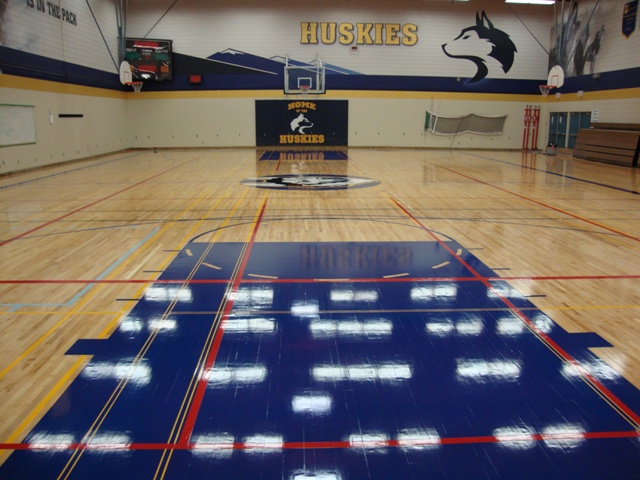 Painting
the game court marking on a gymnasium hardwood floor? AHF offers
industry standard game court markings service in two types of paint.
Urethane alkyd enamel is the type of paint used more than any others
because it can be used for polyurethane water borne and moisture
cured urethane. The other product type is a 2 component epoxy paint
whether a polyamide or methyl ethyl keytone based as in our
specialty SFC paint for over the VCT vinyl composite tile. Again AHF
is using products which are very uncommon in the hardwood floor
industry. These specialty paints also require special masking tape
as the epoxy also creates heat as it flashes. In British Columbia
Gymnasiums what you find is, there are some standard colors for
game courts mostly volley ball in reds, yellow, light green
/powder blue for side courts, dark green and navy blue
occasionally black or a main Basket ball court. Badminton / pickle ball white or cream. look
to All Hardwood Floor for lay out & painting of
game court markings anywhere in British Columbia .
Painting
the game court marking on a gymnasium hardwood floor? AHF offers
industry standard game court markings service in two types of paint.
Urethane alkyd enamel is the type of paint used more than any others
because it can be used for polyurethane water borne and moisture
cured urethane. The other product type is a 2 component epoxy paint
whether a polyamide or methyl ethyl keytone based as in our
specialty SFC paint for over the VCT vinyl composite tile. Again AHF
is using products which are very uncommon in the hardwood floor
industry. These specialty paints also require special masking tape
as the epoxy also creates heat as it flashes. In British Columbia
Gymnasiums what you find is, there are some standard colors for
game courts mostly volley ball in reds, yellow, light green
/powder blue for side courts, dark green and navy blue
occasionally black or a main Basket ball court. Badminton / pickle ball white or cream. look
to All Hardwood Floor for lay out & painting of
game court markings anywhere in British Columbia .
Game court markings layout / painting
Game Court Color transform your organizations wooden floor surface into vibrant inspiring game colors. What's good for the players is good for the spectators
 Game Court marking usually involves plotting and placing game
courts over top of each other either one at a time. Waiting for each
of the previous courts paint to have dried thoroughly enough to tape
on top of, this method is called reverse taping or over lay.
An easier way is to tape out all the courts and cut a way through
the lower priority court allowing dominance of the main courts. this
method leaves separations the width of tape everywhere one line of a
different court meets each other. This method is call single cut out
This is the more widely adapted method, greatly speeds up a court
painting project. When taping out game court markings it is
possible to integrate clear wood reveals by reverse taping. Solid
keys and solid painted center circles could have the court lines
painted on top or in clear wood or two 1/4'' pinstripe outlining the
courts line..
Game Court marking usually involves plotting and placing game
courts over top of each other either one at a time. Waiting for each
of the previous courts paint to have dried thoroughly enough to tape
on top of, this method is called reverse taping or over lay.
An easier way is to tape out all the courts and cut a way through
the lower priority court allowing dominance of the main courts. this
method leaves separations the width of tape everywhere one line of a
different court meets each other. This method is call single cut out
This is the more widely adapted method, greatly speeds up a court
painting project. When taping out game court markings it is
possible to integrate clear wood reveals by reverse taping. Solid
keys and solid painted center circles could have the court lines
painted on top or in clear wood or two 1/4'' pinstripe outlining the
courts line..
AHF-All hardwood floor Ltd offers the game court markings and painting service a la carte' or packaged up with sanding or refinishing services to accommodate your needs.
Looking for some associated game court markings costs?.
Gymnasium floor stain?
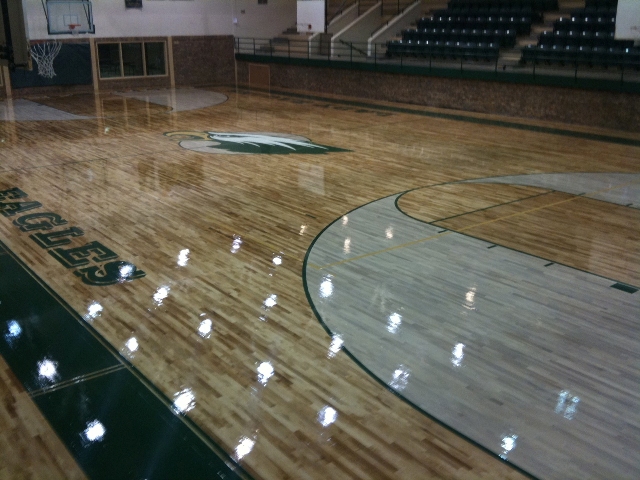 Game
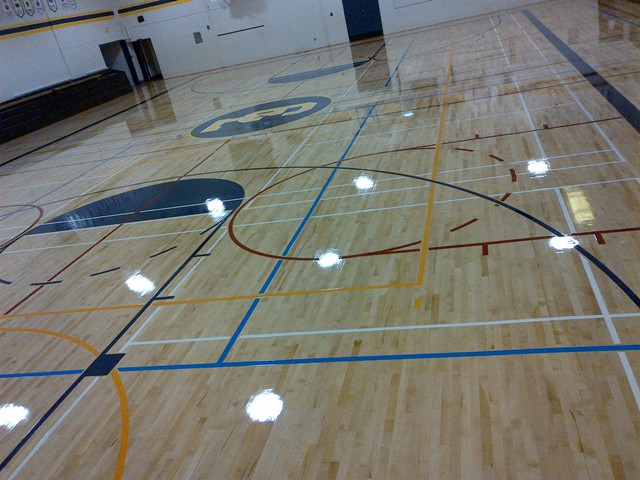
court markings on a professional basket ball court would
include a wood stained area inside the three point circle.
This is a very interesting and visually attractive concept.
Staining the inside three point circle is just one of many
different layouts that can be achieved while sanding and
refinishing the gymnasium hardwood floor. Giving your game
organization's floor a theme and style at Vancouver's
smallest gymnasium floor refinishing company.
Game
court markings on a professional basket ball court would
include a wood stained area inside the three point circle.
This is a very interesting and visually attractive concept.
Staining the inside three point circle is just one of many
different layouts that can be achieved while sanding and
refinishing the gymnasium hardwood floor. Giving your game
organization's floor a theme and style at Vancouver's
smallest gymnasium floor refinishing company.
Best Solutions
 AHF
hardwood floor's Ken Moersch A 35 years served
dedicated Hardwood flooring professional to oversee the entire
game court marking and painting project from start to finish.
AHF is anxious to make some new business friends here in Vancouver.
I am sure you'll enjoy what we have to offer. Top quality
workmanship, Diligent punctual service, deficiency free
completions on schedule.
AHF
hardwood floor's Ken Moersch A 35 years served
dedicated Hardwood flooring professional to oversee the entire
game court marking and painting project from start to finish.
AHF is anxious to make some new business friends here in Vancouver.
I am sure you'll enjoy what we have to offer. Top quality
workmanship, Diligent punctual service, deficiency free
completions on schedule.
Recent Game Line News
AHF hardwood floor ltd /kens floors Coquitlam BC Canada news flash. 1n 2010 the FIBA basket ball association has change the basket ball court dimensions to a new design, Gone are the angular legs for the jump marks from the main basket keys and in its place sit the new NBA style although 16 foot wide keys instead of a 12 foot the old standard.....Read More
- Description
-
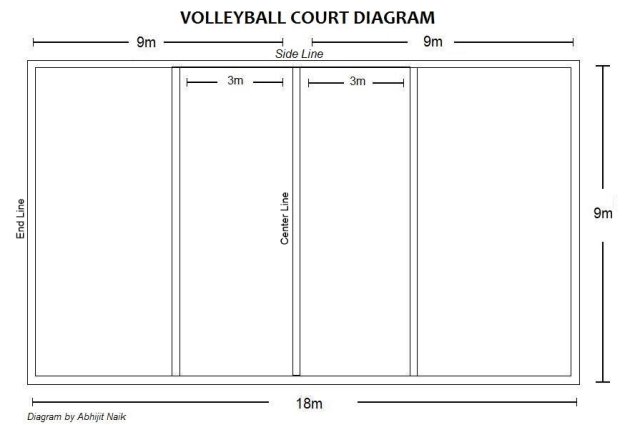
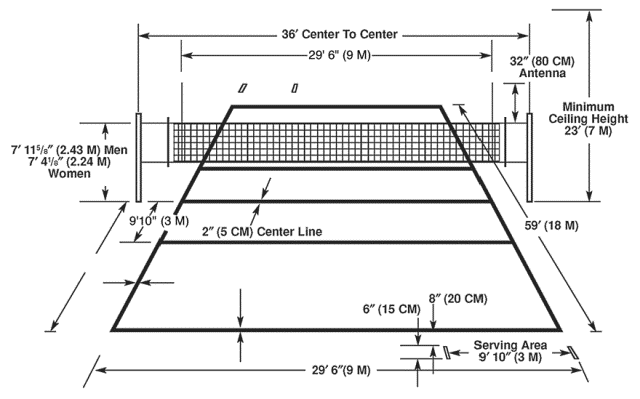
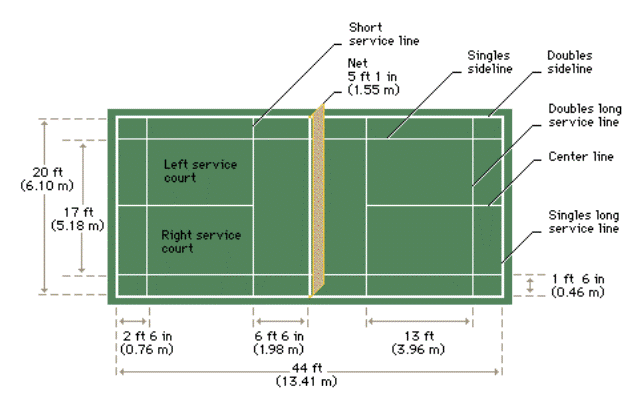
Volleyball court is 60 x 30 approximately and a badminton court 20 x44 feet of course
Volley ball line width is 2 inches while badminton court marking is inch and a half.
The volley ball courts has dominance over the badminton.
the badminton court incorporates a doubles /singles lines which can be color coded to include pickle ball
- Images volleyball-badminton courts colors
-
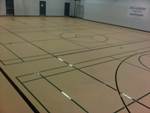
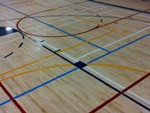
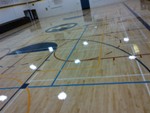
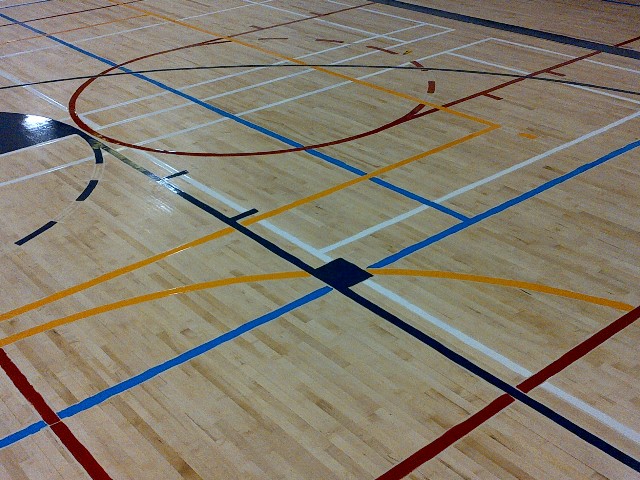
AHF-All hardwood floor ltd this example is the volley ball and badminton game court markings. top.VCT vinyl floor painted in Endura™ SFC Epoxy paint in dark colors due to the application calling for a single application.mid/end Badminton courts are in white with the main volley ball in pumpkin and side volley ball court in Chrysler blue.
- Drawings diagrams volley ball-badminton court dimensions
-
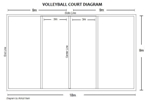
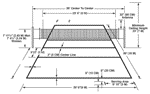
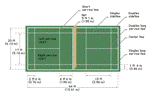
AHF-All hardwood floor ltd Volley ball courts and badminton courts are a staple, they are found everywhere in gymnasiums in BC. Above are some Volley ball and badminton game lines diagrams with dimensions.
Volley ball Milestones
- 1895 William G Morgan Invents the game of Volley ball.
- 1847 FIVB the Federation international Volley Ball.
- 1980 First Gold Medal won by Canadian team internationally women's team Calgary NORCECA junior Women's.
- 1999 New rules to the game of Volley ball.
- Awana/labyrinth/shuffleboard/
-
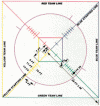 AWANA
is a Christian game developed as a way of reaching out to
children who don't make it to a church on Sundays. Has risen to
worldwide popularity since the 1940's. An exciting game
integrating rewards and the word of the lord. AWANA is an
organization. Acronym: Approved Workmen Are Not Ashamed
AWANA
is a Christian game developed as a way of reaching out to
children who don't make it to a church on Sundays. Has risen to
worldwide popularity since the 1940's. An exciting game
integrating rewards and the word of the lord. AWANA is an
organization. Acronym: Approved Workmen Are Not Ashamed Labyrinth
maze floor art once painted on your floors surface you can begin
your spiritual journey by exploring the single path thought to
enhance psychological and spiritual transformation and enhance
right brain activity. Labyrinths may be left or right handed
determined by the first turn in the labyrinth.
Labyrinth
maze floor art once painted on your floors surface you can begin
your spiritual journey by exploring the single path thought to
enhance psychological and spiritual transformation and enhance
right brain activity. Labyrinths may be left or right handed
determined by the first turn in the labyrinth.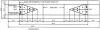 Floor
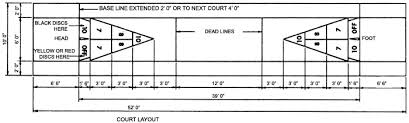
Shuffle board is one of those games requested by utility
gymnasiums recreation centers. Shuffle Board is making a huge
come back as high density housing produces more private and
shared recreation facilities
Floor
Shuffle board is one of those games requested by utility
gymnasiums recreation centers. Shuffle Board is making a huge
come back as high density housing produces more private and
shared recreation facilities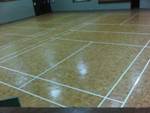 Pickle
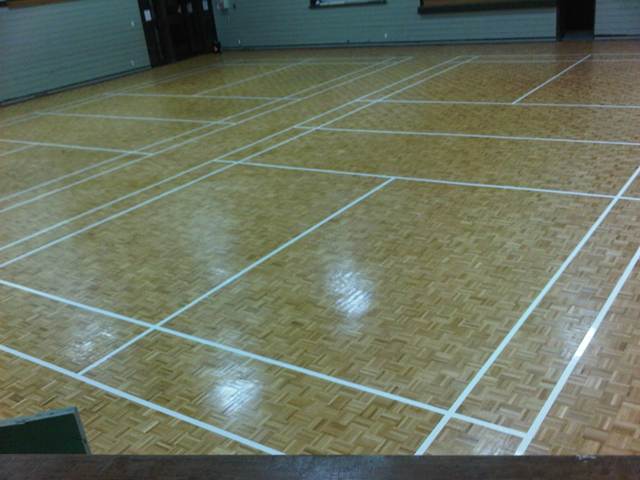
ballgame court and a badminton court share the outside court
lines, This parquet gymnasium is the Delta recreation centre
Ladner south Delta, who looked me up after trying to refinish the gymnasium
floor by using the part time staff at least there is an
interesting story to tell..... Because i am passionate about my
work I find myself often jump in to help others who have tried
to take on the tremendous task of sanding or refinishing
hardwood floors the themselves.
Pickle
ballgame court and a badminton court share the outside court
lines, This parquet gymnasium is the Delta recreation centre
Ladner south Delta, who looked me up after trying to refinish the gymnasium
floor by using the part time staff at least there is an
interesting story to tell..... Because i am passionate about my
work I find myself often jump in to help others who have tried
to take on the tremendous task of sanding or refinishing
hardwood floors the themselves.
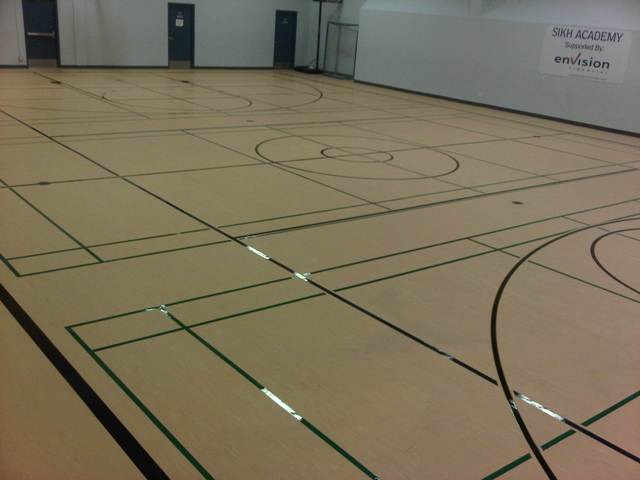

Moisture cured urethane is the more highly specialized floor coating application where all the floor coating parameters are specific, this solvent based product is not compatible with the polyurethane or the water borne floor finishes.
Waterborne finish does not have a water borne paint for the gym floor refinishing to be non toxic like other types of hardwood applications. The paint that is most preferred by Bona sport poly and Bona super sport users is Bona game paint a type of urethane paint. I use The locally made Canadian urethane alkyd enamels (anything but Benjamin Moores ). Others will use the Poloplaz™ Supreme or Magnum. Poloplaz make there own urethane paint to go with there Magnum Low Voc polyurethane gym floor finish and Supreme 2 component water borne. So the point is. the paint is some variations of a urethane alkyd enamel that is used for water borne floor coatings like Basic Coatings™ Street Shoe or a urethane finish coating